


1 Likes

0 Spotted

0 Garage

0 Lists

0 Shares

46% Filled
2 Contributors
Car Timeline
Location
Collection
Events
Racing
Museum
Sales
 Log in
Log in
Log in
Log in
Log in
Needs information, contribute here
Information
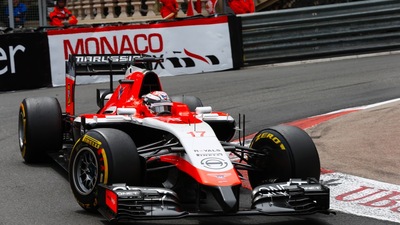
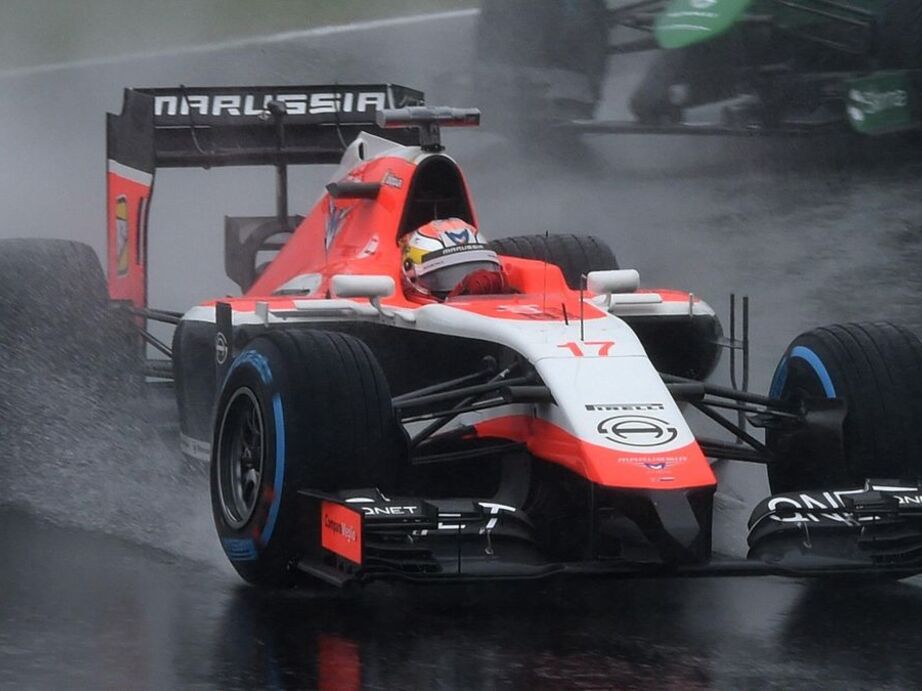
Jules Bianchi's car in 2014. He finished P9 at Monaco, which was his and Marussia's only point finish.
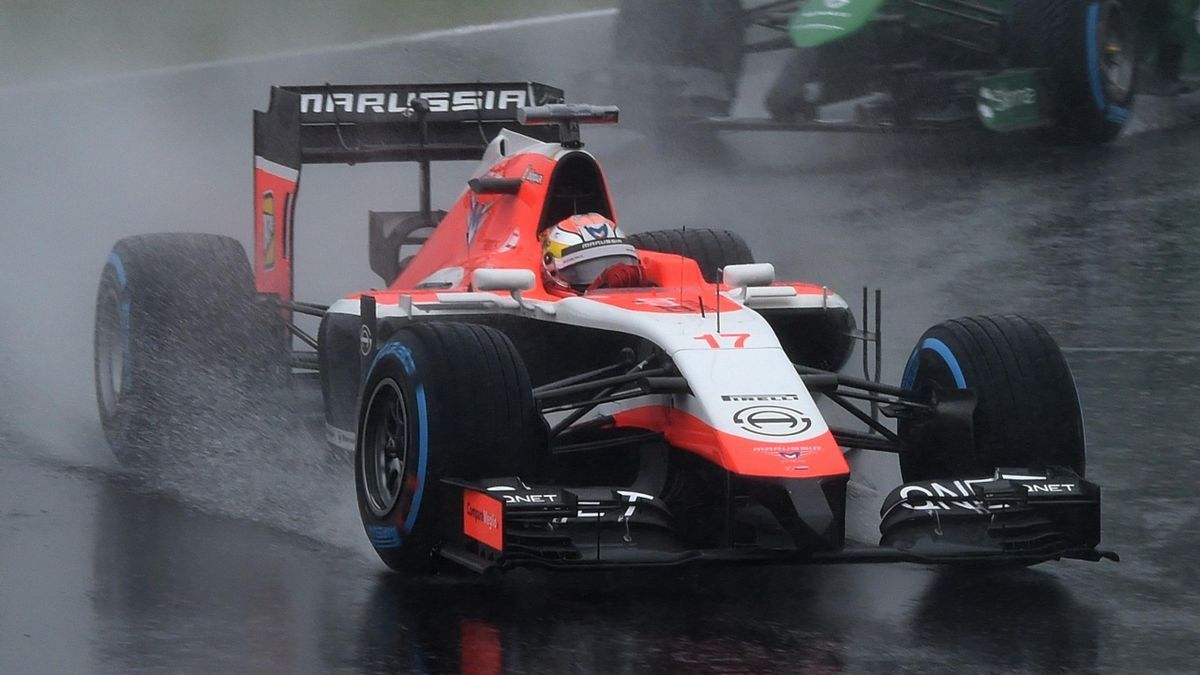
During Japanese Grand Prix, Typhoon Phonfone caused heavy rain. On lap 42, it was almost 5PM and the visibility was very poor. Sauber's Adrian Sutil crashed at Dunlop Curve, and a crane tractor was there to clean away his car. Bianchi lost control at the same corner, and hit the tractor at a speed of 212 km/h. The impact reached 254G, it was so fierce that the tractor along with the Sauber lifted in the air were thrown off the ground. Bianchi's helmet hit the tractor and his head was severely injured. The Marussia chassis was also written off, it's roll bar and engine cover were cut off. Due to the heavy rain, medical helicopters couldn't take off, and the unconscious Bianchi was sent to the hospital by ambulance and arrived more than half an hour after the accident.
The race was immediately stopped after the tragic accident. Marussia only entered one car in the following Russian Grand Prix, before going into administration and missing the remaining 3 races.
Bianchi's condition was critical but stable, once he was even breathing unaided, but always comatose. On 17 July 2015, Jules Bianchi passed away from heavy brain injury at the age of 25. This was the last fatality in F1 Championship up to now. Many people in the sport think highly of him, considering he could have archived success as a future driver for Ferrari.
Many safety measurements were introduced or invented after Bianchi's accident. Among them, the most significant one is the halo system, which is a circular protection system around the driver's helmet. After its introduction in 2018, halo has saved many drivers from serious injury or even fatality, including Charles Leclerc, Bianchi's godson and close friend, at 2018 Spa, Romain Grosjean at 2020 Bahrain, Lewis Hamilton at 2021 Monza, Zhou Guanyu at 2022 Silverstone, etc, as well as many examples in other formula categories.
Also Virtue Safety Car (VSC) was invented to slow down the cars automatically in dangerous condition. And when there is a recovery vehicle or any objects on track, VSC or Safety Car must be deployed, to slow down the drivers and avoid them hitting these objects. Furthermore, the stewards are very cautious in bad weather, if the medical helicopter cannot take off, the session must not start.
Videos
Log in
 Details
 Specifics

Model Year
Log in

Color
Log in

Interior
Log in

Original Market Specification
Log in

Transmission
Log in

Drive
Log in

Plaque Number
Log in

VIN
Log in

Chassis
Log in

Engine Number
Log in

Last known km/miles
Log in

MSRP
Log in

Status
Log in

Datasource
Log in

Sale Link
--
Build Sheet
Log in
Belongings
Log in
Plates
Log in
 Marussia MR03