Kerb Weight
N/A



 Technical Specs
 Production Details

Kerb Weight
N/A

Engine
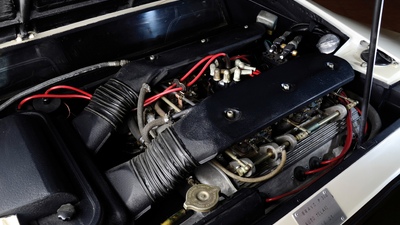
2,996 cc transverse mid-mounted 90o V-8 DOHC engine

Top Speed
N/A

Acceleration
N/A

Horsepower
300 bhp (221 kW)

Transmission
5-speed gearbox

Torque
N/A

Production
2

Year
N/A
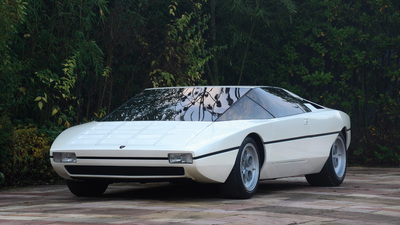
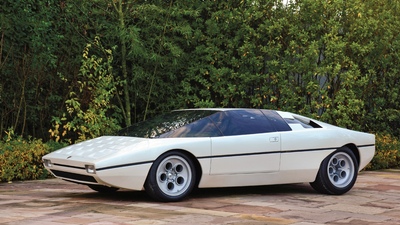
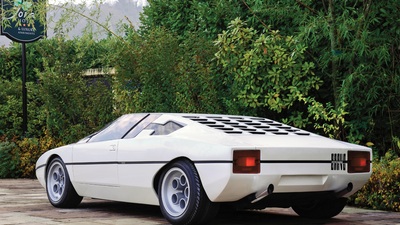
In just 10 years after its founding in 1963, Lamborghini rose to become a powerhouse in Italy’s supercar echelons, rivalling Ferrari and Maserati. Starting with the ground-breaking Miura, the Sant’Agata Bolognese manufacturer had begun a fruitful collaboration with Bertone, which also spawned the Espada and Jarama and culminated in 1973 with the launch of the outrageous Countach. In parallel to those V-12-powered cars, Lamborghini launched a V-8 line with the Urraco in 1970. It was on this chassis that Bertone based its third Lamborghini dream car after the 1967 Marzal and the 1971 Countach prototype.
Just as the former two had led to production models, Bertone hoped the Bravo would be adapted into a two-seater model to sit alongside the 2+2 Urraco in Lamborghini’s line-up. For this reason, the proposed car was a good 20 inches shorter than the Urraco, with its wheelbase chopped accordingly by 7.8 inches. The engine was the three-litre unit of the P300 version of the Urraco, launched concurrently. It was fed by four twin-choke Weber carburettors. In a 1970s road test, Road & Track praised the car for its power delivery and the precision of both its steering and its handling, concluding that it is everything the Urraco could and should have been.
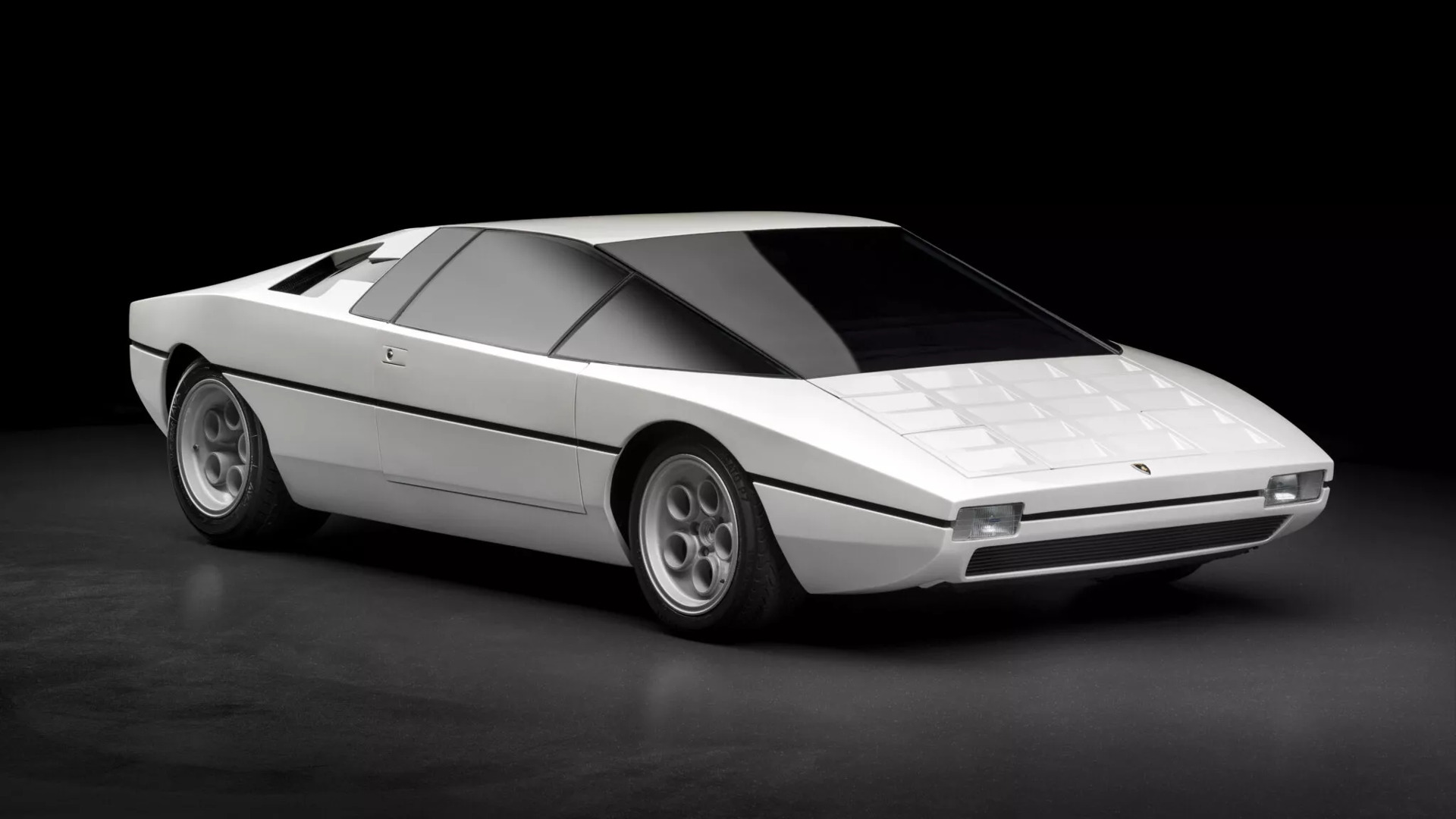
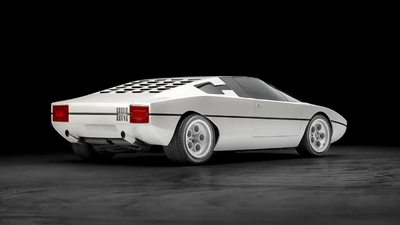
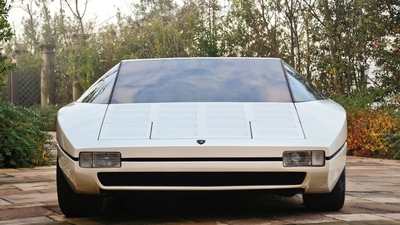
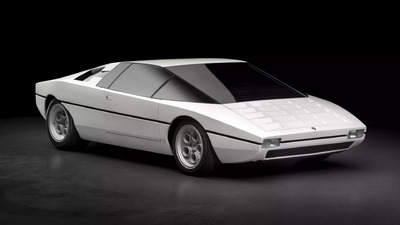
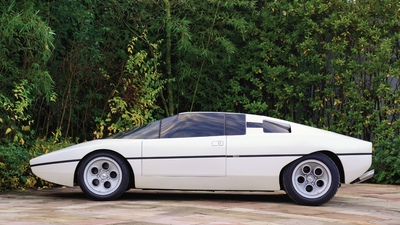
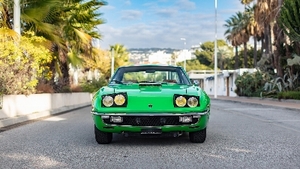
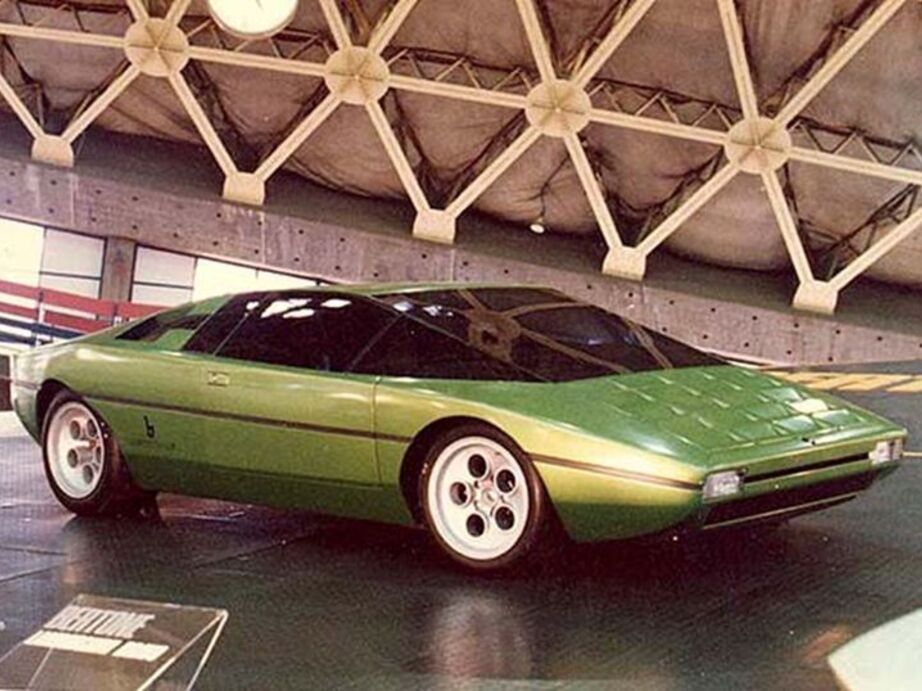
The Bravo’s styling was certainly striking, in the vein of Marcello Gandini’s previous styling exercises for Bertone. The sharp wedge shape was cut off by flat, near-vertical surfaces front and rear. The base of the windscreen was set ahead of the front axle, and its very steep angle of rake almost matched that of the short front bonnet. Likewise, the surfaces at the top of both front and rear wings gently twisted to match the inclination of the side windows, a treatment Gandini had honed through the Stratos Zero and Countach. The talented designer complemented this basic shape with some strong graphic features, such as the very geometric slats that pierced both front and rear bonnets or the slanted rear wheel-arch cut-outs that were becoming his trademark. The wheels themselves introduced the theme of the five round holes that remained a Lamborghini staple right up to the Murciélago. Pop-up headlights were neatly concealed in the louvered front panel. While all other glass panels were meticulously mounted flush, the way the rear three-quarter window gently folded into the bodywork to create air intakes for the engine bay was another highlight of Gandini’s magic touch.
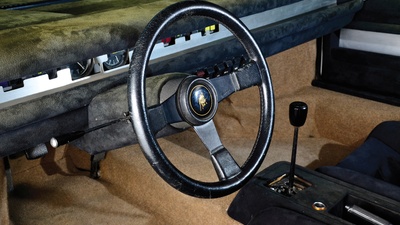
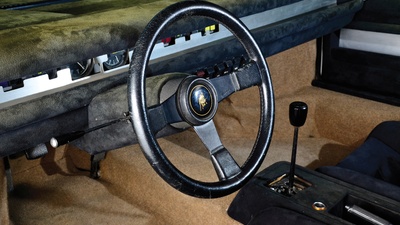
The interior was equally essential, with Alcantara covering the low-slung bucket seats and dashboard and a graphic approach to the instrumentation layout: all dials and warning lights were located in a single horizontal strip recessed in the dashboard’s fascia, framed by brushed aluminium. Although the windscreen was basically divided into three parts, the very thin frame holding the glass allowed for excellent forward visibility. It was Lamborghini chief engineer Paolo Stanzani himself who reportedly had requested large glass areas and a smooth integration of glass surfaces with the body.
Empty List
Empty List
Empty List
LIKES
SPOTTED
DREAM GARAGE
Empty List
Empty List


By clicking “Accept All Cookies”, you consent to the storage of cookies on your device to improve website navigation, analyze website usage and assist in our marketing efforts.
 Lamborghini Bravo


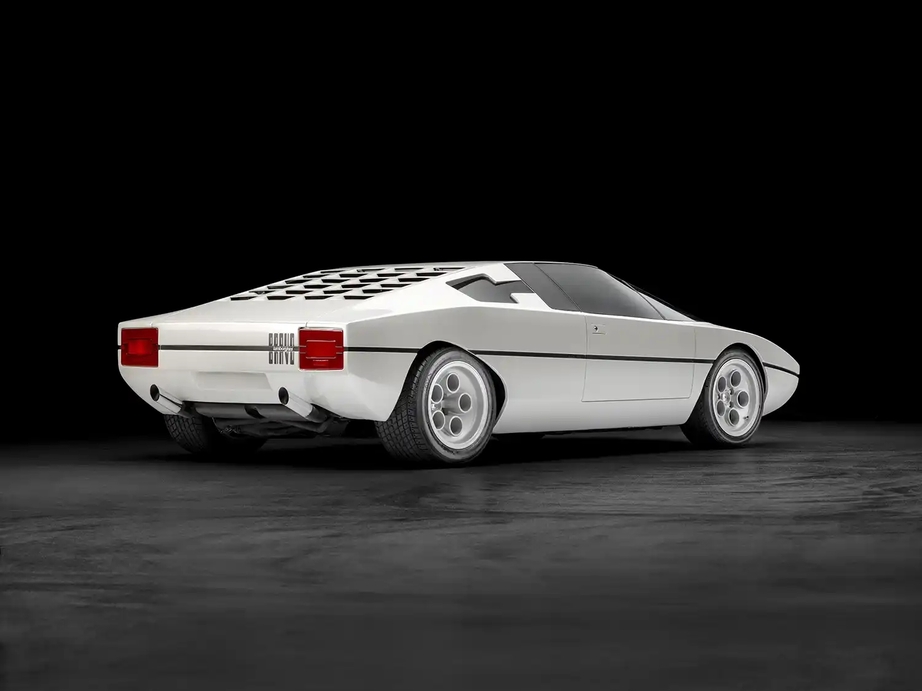
 Lamborghini Bravo